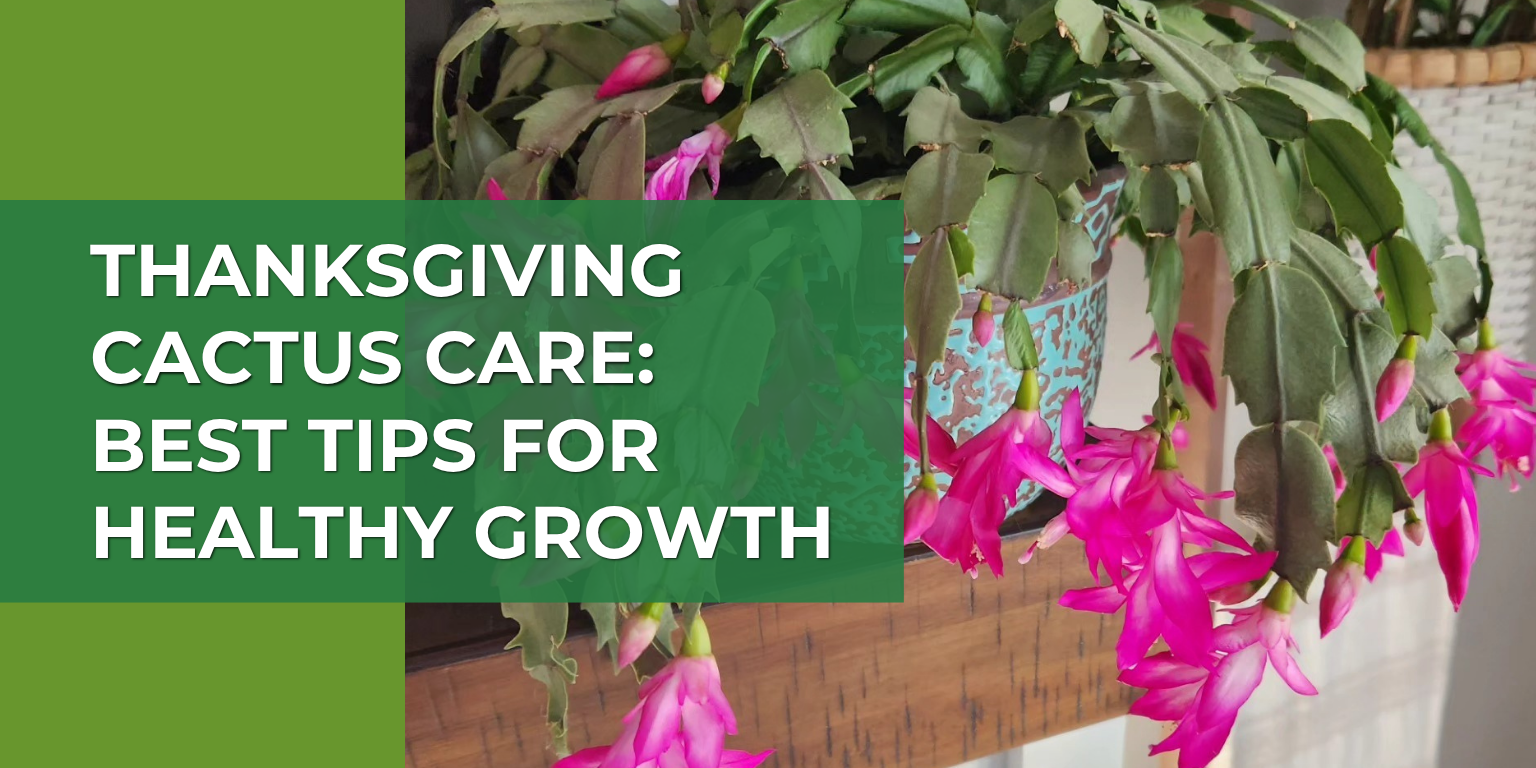
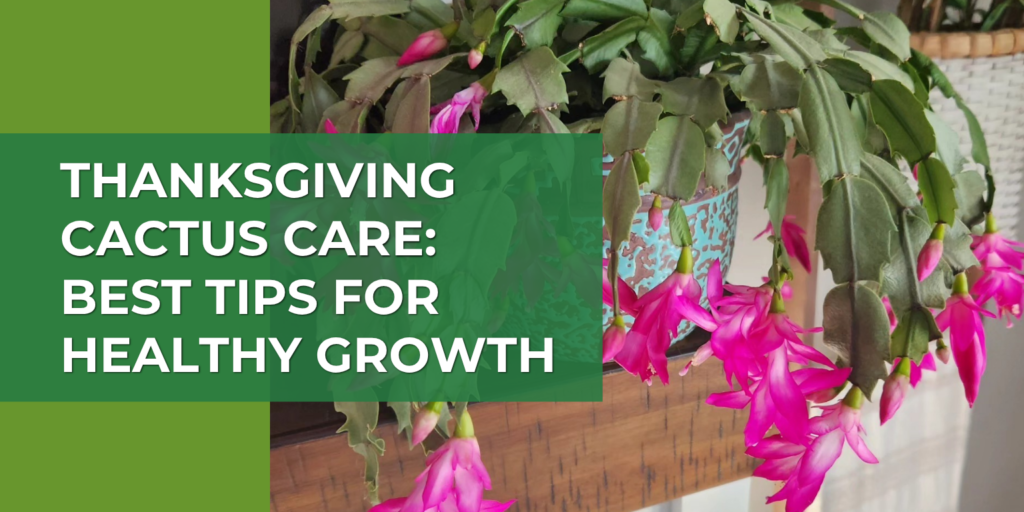
Thanksgiving Cactus Care: Best Tips for Healthy Growth
If you are treating your Thanksgiving Cactus like a typical desert cactus, you are accidentally starving it of the moisture it desperately needs. Many people receive these beautiful blooming plants in November. They proudly display them on a table. Then they watch the flowers drop off and the green segments turn limp and wrinkled by January.
This is incredibly frustrating. You want a beautiful houseplant. You end up with a sad pile of shriveled leaves instead. The plant looks terrible and you feel like a failure.
You will learn the tropical origins of this unique plant today. You will get the exact watering schedule it demands to stay plump and green. You will also discover the specific trick to forcing massive blooms every single fall. Proper Thanksgiving Cactus Care stops the guesswork completely. Mastering Schlumbergera truncata care is much easier than you think once you know the rules.
Tropical Roots: Why Is My Plant So Different?
The Thanksgiving Cactus is scientifically known as Schlumbergera truncata. It is not a desert plant at all. It is actually an epiphyte. This means it grows on tree branches in the humid Brazilian rainforest. It does not grow in dry sand. It gets its nutrients from decaying leaves and rain washing over the tree bark.
You can identify it easily. Look closely at the edges of the green leaves. Look for pointed teeth on the leaf segments. This sharp shape distinguishes it from the rounded edges of a Christmas Cactus.
Because of its jungle origins, it requires high humidity and bright indirect light. It will burn in blistering direct sun. A typical desert has 10 to 20 percent humidity. This tropical plant prefers 50 to 60 percent humidity in a home environment.
You can use a pebble tray filled with water to create this moisture. Just place a shallow dish of pebbles under the pot and add water. The water evaporates and creates a humid microclimate for the leaves. Give it the rainforest experience to keep it happy.
The Perfect Thanksgiving Cactus Watering Schedule
The soil for this plant should never be allowed to dry out completely until it becomes a hard brick. This is a massive difference from typical desert cacti. They need consistent moisture to survive.
You should water the plant when the top 1 to 2 inches of soil feel dry to the touch. Stick your finger directly into the dirt to check. Give the plant a deep drink if the dirt feels dry.
Provide excellent drainage for the roots. These plants absolutely hate wet feet. They will succumb to root rot if left sitting in a saucer of water. Always empty the plastic drip tray a few minutes after you water.
Here is a seasonal baseline for Thanksgiving cactus watering. You should water roughly every one to two weeks during active growth in the spring and summer. The plant uses more water when it pushes out new leaves. You must water slightly less often during winter rest periods. The plant sleeps after the blooming phase finishes.
Using a fast draining soil blend keeps the roots perfectly healthy. You can make the perfect soil at home. Mix one part regular potting soil with one part perlite and one part orchid bark. The bark pieces give the roots something to grab. This mimics the tree branches in the jungle perfectly.
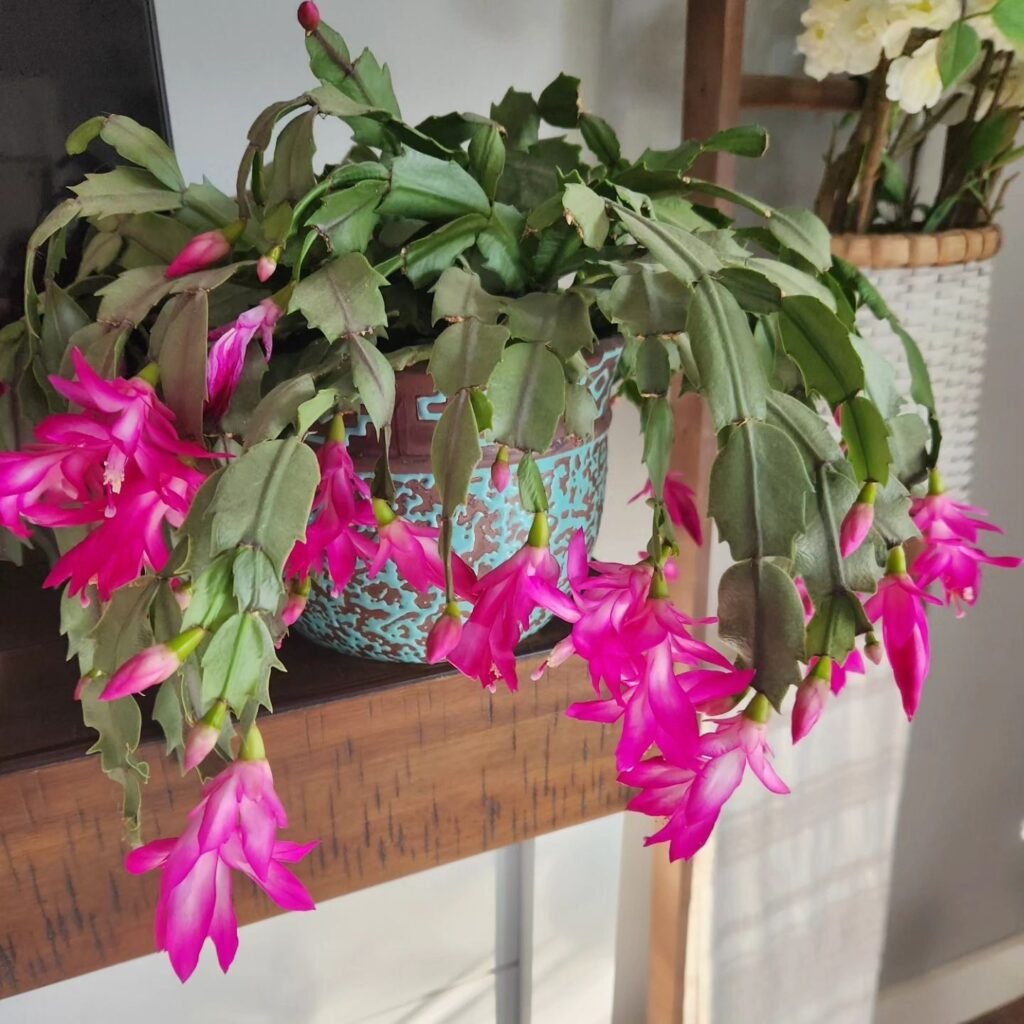
The 3 Step Secret: How to Make Thanksgiving Cactus Bloom
Blooms are triggered by the length of the day and cooler temperatures. This natural process is called photoperiodism. Modern homes are too bright at night. The constant artificial light confuses the plant. You must manually force the plant to bloom. Here is exactly how to make Thanksgiving cactus bloom.
- Find a dark closet or a thick cardboard box. You need a space that receives absolutely zero light.
- Restrict the light entirely. Starting in mid September, the plant requires 12 to 14 hours of continuous darkness every single night. Even a reading lamp or a street light shining through a window will interrupt the dark cycle. This interruption stops the plant from setting buds completely.
- Return the plant to a bright window during the day. It needs bright indirect sunlight to gather energy for the flowers.
You also need to drop the temperature. Keep daytime temperatures around 65 F to 70 F. You must keep nighttime temperatures around 55 F to 60 F. Continue this strict schedule for six full weeks. Your plant will reward your hard work. It will explode with new flower buds right before the holiday season.
Troubleshooting 3 Common Problems: Bud Drop and Limp Leaves
Mistakes happen to everyone. Your plant will tell you exactly what it needs through physical clues. Good Schlumbergera truncata care means watching for these visual signs.
- Bud Drop: This is the most common complaint from plant owners. It is usually caused by sudden temperature drafts. Do not place the pot near a heating vent or a drafty window. Rough handling also causes massive problems. Roughly 80 percent of bud drop cases occur because the owner moved the pot to a different room right as it was about to flower. Leave the plant alone once the buds form.
- Limp or Wrinkled Leaves: Ironically, this symptom can mean either severe underwatering or severe root rot from overwatering. Check the roots to diagnose the real issue. Gently pull the plant out of the pot. Dry roots need a good drink of water. Mushy brown roots mean rot. You must repot the plant in fresh soil immediately to save it.
- Red or Purple Leaves: This bright color change is a clear sign of sun stress. The plant is getting too much direct sunlight. The UV rays are literally burning the fragile tissue. You need to move it to a shadier spot right away.
Conclusion
This is a true jungle plant requiring damp soil and bright indirect light. It demands a strict dark period in the fall to produce its famous flowers. Always remember that it lives on trees and hates standing water.
Mark your calendar for mid September right now. You will be completely ready to start the darkness treatments for holiday blooms. By learning about its tropical nature, you can master Thanksgiving Cactus Care completely. You will enjoy spectacular blooms year after year.